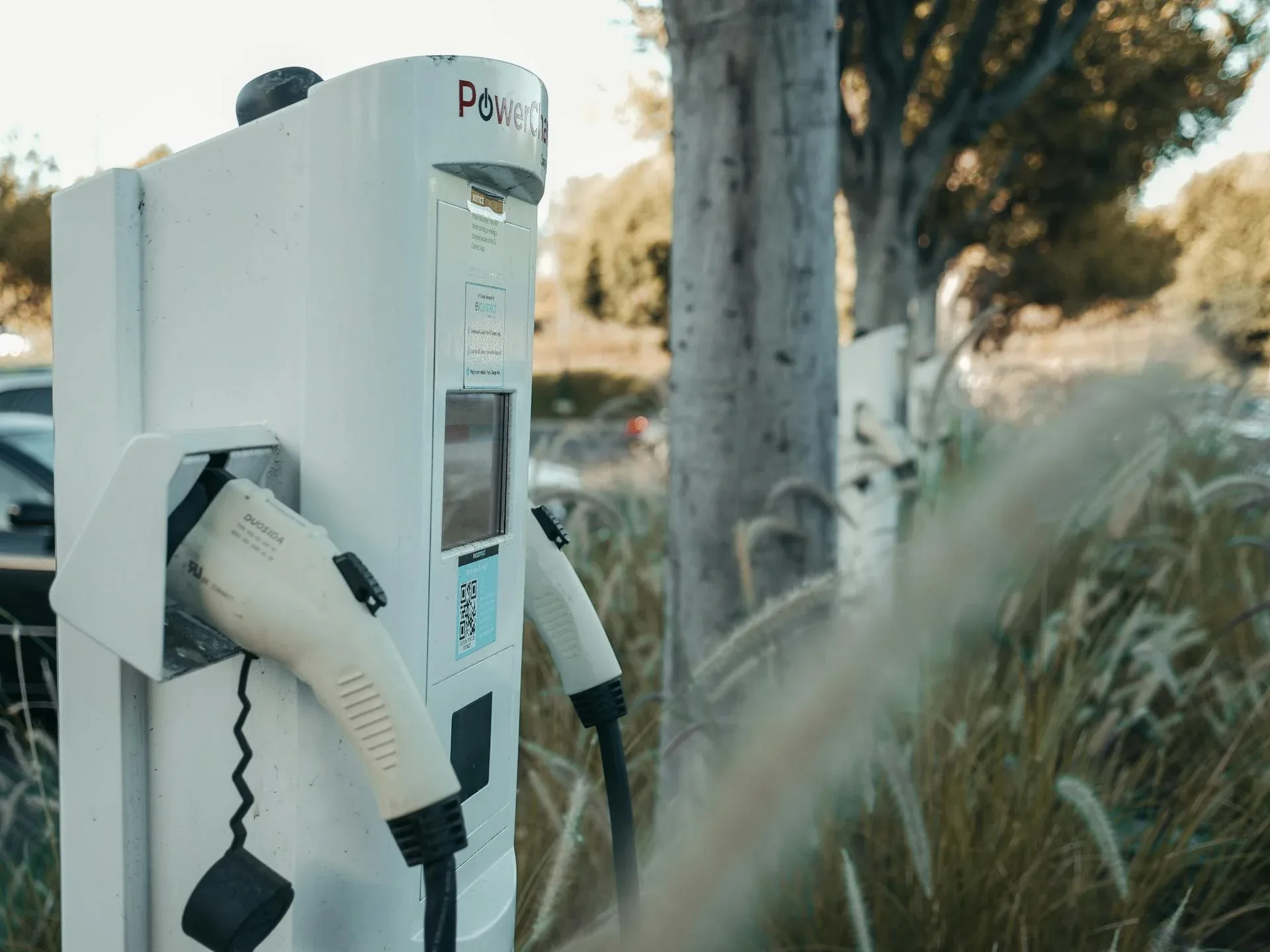
Fife isn't a default — it's a deliberate choice. The convergence of I-5 and SR-167, 3 MW of secured power from Puget Sound Energy, and ~40,000 daily truck movements within 5 miles all stack up in one place. That's why we built here, and why this site is the corridor's commercial charging anchor.
We wrote this page for the people who care about whether Fife was the right place to build — and what that decision means for them. If you're one of these readers, the rest of this page is the case in long form.
You run Class 4-8 vehicles on the I-5 corridor. You need to know whether Fife works as a charging stop, a depot alternative, or a corridor anchor. The answer is yes — and we built the site that way on purpose.
You're evaluating the project — utility, agency, capital partner, grant administrator. You want to understand the location thesis: power, demand, regulation, timing. The next four sections lay out how each piece fits.
You charge an EV in Pierce County or anywhere along I-5 and want to know what makes Fife different from the existing options. Skip to the comparison table for the short answer.
The South Sound has DC fast chargers — but they were built for passenger cars. None offer pull-through lanes, fleet-scale port counts, or the peak power Class 4-8 trucks need to charge fast on the corridor. As Washington's Advanced Clean Trucks rule ramps up sales targets, the commercial gap is where demand is landing. That's the gap we're solving.
Pierce County has a handful of passenger-focused DCFC sites in Tacoma, but none are built for Class 4-8 commercial trucks. No existing site in the South Sound offers pull-through lanes, fleet-scale port counts, or the peak power that keeps a heavy-duty truck moving. As medium- and heavy-duty electrification ramps up under Washington's ACT rule, that's the wall operators are running into.
2020: 1.2% of Pierce County vehicles were EVs
2024: 4.1%
Projection: 15%+ by 2030
That's the passenger trajectory. The commercial trajectory is steeper — driven by ACT-rule sales targets and corporate fleet electrification commitments.
Fleet operators planning electrification need to know charging exists before they buy trucks. By breaking ground while the regulatory ramp is still climbing, we give operators along the I-5 corridor a place to plug in — and a partner to plan their routes around.
If you're a driver comparing options, here's the quick read. Several passenger-focused DCFC sites operate in and around Tacoma. None offer pull-through lanes, a 20-port fleet-scale site, or Class 4-8 commercial truck access. Fife Charging Hub fills the commercial and multi-port gap — not the passenger-car one.
| Location | Approx. Distance from Fife | Ports (DCFC) | Class 4-8 Pull-Through? |
|---|---|---|---|
| EVCS, Fife, WA | ~0–2 mi | Small site | No |
| EVgo, 2702 E D St, Tacoma (near Tacoma Dome) | ~4–5 mi | ~3 DCFC stalls | No |
| EVgo, LeMay – America's Car Museum, Tacoma | ~5 mi | Small site | No |
| Electrify America, Walmart, 1965 S Union Ave, Tacoma | ~7–8 mi | 3 DCFC + 1 L2 | No |
| EVgo, Tacoma Mall, 4502 S Steele St | ~8–9 mi | ~3 DCFC + 2 L2 | No |
| Tesla Supercharger, Tacoma area | ~8–10 mi | Varies (NACS/CCS1 via adapter) | No |
| Electrify America / ChargePoint, Auburn & Kent | ~18–22 mi | Varies by site | No |
| Fife Charging Hub | — | 20 DCFC ports, 150kW+ per port*, up to 480kW peak | Yes — 6 lanes, Class 4-8 |
Note: Distances are approximate driving distances from 7801 26th St E, Fife, WA, based on the station addresses published by each network. Port counts are drawn from each network's public site listings as of April 2026 and can change. Sources: EVgo, Electrify America, and ChargePoint public station directories. "Class 4-8 Pull-Through" reflects publicly available site layouts; contact each operator to verify current accessibility for your vehicle. *150kW+ refers to per-port power on Fife Charging Hub's pull-through charging stalls.
We didn't pick Fife because it was available. We picked it because it sits at the corridor's busiest commercial freight intersection, minutes from the Port of Tacoma, surrounded by the distribution centers your trucks already serve. If your fleet runs the I-5 corridor, you're already here.
I-5 is the West Coast's primary freight artery, connecting California to Canada. Aggregated across six WSDOT permanent counting stations on I-5, SR-167, SR-512, SR-509, SR-161, and SR-99 within a 3.5-mile radius of the site, the surrounding corridor carries 39,600 daily truck movements out of 433,000 total daily vehicles — a 9.15% truck share (WSDOT AADT, 2024). Exit 137 puts the site one turn off the freeway via 26th St E.
SR-167 connects the Tacoma industrial corridor to Kent, Auburn, and Renton — the distribution belt that supplies the Puget Sound region. Fife sits approximately 3 miles from the Port of Tacoma via the planned SR-167 extension, which will also add direct interchange access at the site (subject to the current WSDOT project schedule). The Port operates within the Northwest Seaport Alliance, the third-busiest seaport on the West Coast (3.34M TEU in 2024 across Tacoma and Seattle). Major distribution centers sit within 5 miles: US Foods, Cardinal Health, Regal Logistics, FedEx Ground, Mission Foods.
A Fife stop doesn't add a detour to your route — it is the route. Trucks moving between the Port of Tacoma and the SR-167 distribution belt pass within minutes of the site. Drivers heading north or south on I-5 take Exit 137 and pull through. The location works because the freight already moves through it.
Power is the hardest part of building a charging site. Securing it can take years. Fife already has 3 MW from Puget Sound Energy — locked in before we broke ground, ready to support 20 DC fast-charging ports at launch with room to grow. That's why we can promise reliability: we have the power to deliver it.
You can't run a charging site without power, so we got it locked down first. With 3 MW from PSE in hand, every other build decision was made against a real ceiling — not a wish list.
Every plug delivers at least 100kW — and ramps up to a blazing 480kW peak when the site has headroom. That's what 3 MW from PSE buys: full-site capacity at peak hours, no throttling, no surprises mid-charge.
The 3 MW also gives us room to grow — more ports, battery storage, even selling power back to the grid when demand spikes. That extra income helps keep your charging price right where you need it.
Washington's Advanced Clean Trucks rule, the Clean Fuel Standard, and the Climate Commitment Act don't just create a market — they create a deadline. Fleets that wait until the schedule tightens will be chasing infrastructure. Operators who plan now have options. Our job is to be ready when our customers need us — not the other way around.
Washington's ACT rule (WAC 173-423-075, under the state's Clean Vehicles Program) requires manufacturers to sell escalating percentages of zero-emission medium- and heavy-duty trucks through model year 2035. As more ZEV trucks reach Washington fleets, charging access — not vehicle availability — becomes the binding constraint. We're filling that constraint at the corridor's busiest interchange.
The Clean Fuel Standard requires fuel producers to reduce the carbon intensity of transportation fuels over time, generating credits that subsidize zero-emission alternatives. For fleets, it lowers the effective cost of electric operation. For us, it strengthens the underlying economics of public DC fast charging.
Washington's cap-and-invest program funds clean energy and electrification projects. Fife Charging Hub is supported by CCA funding — aligning public climate goals with private infrastructure deployment, and one reason this site is built to grant-compliant access standards from day one.
Stripped of the data tables and acronyms, our case for Fife comes down to four sentences.
~40,000 daily truck movements within 5 miles. We didn't have to create demand — we built where it already exists.
3 MW secured from PSE before construction. That's not a promise on a deck — it's the constraint we built around.
Pierce County has DCFC for sedans. None for Class 4-8 trucks. We're filling that gap on purpose, not by accident.
The ACT rule, Clean Fuel Standard, and Climate Commitment Act all converge between now and 2035. Fleets that plan now have options. We're the option.
Common questions from fleet operators, partners, and drivers about why Fife — and what that means for them.
Fife uniquely combines three critical advantages: (1) 3 MW of power from Puget Sound Energy (PSE) — most sites face long waits for power allocation, while Fife has its 3 MW allocated and secured from PSE; (2) Geographic convergence of I-5 and SR-167, capturing both commuter and freight traffic; (3) Proximity to the Port of Tacoma and major distribution centers. The South Sound charging gap means demand is growing faster than supply, and Fife sits at the bottleneck.
Fife is approximately 3 miles from the Port of Tacoma via the planned SR-167 extension. The Port operates within the Northwest Seaport Alliance, the third-busiest seaport on the West Coast (3.34 million TEU in 2024, Tacoma and Seattle combined). Combined with access to major distribution centers like US Foods, Cardinal Health, Regal Logistics, FedEx Ground, and Mission Foods within a 5-mile radius, the location is built for port-dependent freight operations planning fleet electrification.
The South Sound has a handful of passenger-focused DCFC sites in and around Tacoma, but none are purpose-built for Class 4-8 commercial trucks. There are no pull-through lanes, no fleet-scale port counts, and no peak power sized to keep heavy-duty trucks moving. As Washington's Advanced Clean Trucks rule scales up in 2025–2027, the commercial charging gap — not the passenger gap — is the critical infrastructure constraint. Fife sits at the I-5/SR-167 convergence point where that demand is landing.
Yes. Fife has 3 MW of power from Puget Sound Energy (PSE), which is rare and valuable. Power availability is the #1 bottleneck for EV charging development nationwide. With 3 MW allocated and secured from PSE, Fife is positioned to launch with 20 DC fast-charging ports and the headroom to scale.
The Washington Clean Fuel Standard is a regulatory mechanism requiring fuel producers to reduce the carbon intensity of transportation fuels. This drives fleet electrification across the state, particularly for medium- and heavy-duty vehicles. Combined with the Advanced Clean Trucks (ACT) rule, which requires manufacturers to sell escalating percentages of zero-emission medium- and heavy-duty trucks through model year 2035, these regulations create urgent demand for charging infrastructure. Fife's location and power availability position it to serve this demand.
I-5 is the West Coast's primary freight artery and SR-167 connects the Tacoma industrial corridor to Kent, Auburn, and Renton. The combined corridor carries ~40,000 Truck AADT within 5 miles of the Fife site. The convergence at Exit 137 captures both commuter and freight traffic. The SR-167 extension is projected to add direct interchange access, subject to the current WSDOT project schedule. See full corridor analysis →
EV charging infrastructure requires skilled technicians for installation, maintenance, and customer support. Fife's proximity to the greater Seattle metropolitan area and existing industrial workforce provides access to trained personnel. Additionally, Fife's lower land and operational costs compared to Seattle or Bellevue allow charging operators to maintain competitive pricing while scaling operations.
Washington state has set ambitious EV adoption targets. Personal vehicle electrification is accelerating in Pierce County (1.2% of vehicles in 2020, 4.1% by 2024), and the Advanced Clean Trucks rule ramps zero-emission new-truck sales requirements through model year 2035. The gap between EV adoption and available commercial charging infrastructure creates an urgent opportunity window — Fife's Q1 2027 launch is timed to meet that demand as it concentrates.